✍️
Written by the Digital Signature & Compliance Team, Rudra Capital — we issue, renew, and troubleshoot Class 3 Digital Signature Certificates (DSC) for businesses, startups, and professionals across India every week.
Whether you need a DSC token configured for GST portal filing, Income Tax Returns, MCA/ROC corporate compliances, or DGFT & e-Tenders, our team helps you pick, configure, and deploy the exact compliant hardware token for your operational needs.
Last reviewed: August 2026
DSC Tokens
Compliance Alert
16th August 2026 · 12-min read
 If you use a DSC (Digital Signature Certificate) for GST, Income Tax, MCA/ROC filing, tenders, DGFT, or GeM — this affects you. Here’s what’s actually changing, explained simply, and how to get sorted without the stress.
Your DSC token is that small USB stick you plug in to digitally sign your GST returns, income tax filings, ROC forms, or tender documents. A change is coming to how these tokens are built, and the key date everyone’s talking about is 21 September 2026.
There’s a lot of noise around this online right now — some of it accurate, some of it just token sellers creating urgency to move stock. This guide gives you the real picture in plain language: what’s changing, what isn’t, the common DSC problems that trip people up far more often than this change ever will, and — if you decide you need a new token — how to get one from us, set up correctly, the same day you ask.
The short version: Your current DSC token will keep working after 21 September 2026 — it doesn’t stop that day. What’s changing is that new tokens and renewals issued around and after that date will mostly be on the newer, more secure FIPS 140-3 hardware. So this is about planning your next purchase or renewal well — not panicking about the token sitting in your drawer today.
What is FIPS 140-3, in Plain Words?
FIPS 140-3 is just the name of a security standard — it’s the rulebook that decides how secure the chip inside your USB token needs to be. Think of it like a safety rating, similar to how a car gets a crash-test rating. The tokens most people use today carry the older rating, FIPS 140-2. The new generation carries FIPS 140-3, which means the chip inside is:
- Harder to hack, clone, or tamper with
- Better at protecting your private signing key
- Built and tested against the latest global security requirements
- The direction every serious token manufacturer is now moving toward
That’s it — it’s a hardware upgrade, not a complicated new process for you to learn. It plugs in and works exactly the same way your current token does.
Who Needs to Pay Attention to This?
If you use a DSC for any of the following, you should read on:
- MCA / ROC filings
- Income Tax e-filing
- GST returns
- ICEGATE / Customs
- DGFT / IEC
- EPFO filings
- Trademark filing
- e-Tendering
- GeM Portal
- Government procurement
If you’re a company, a CA, a CS, a GST practitioner, or a business that bids on tenders — you almost certainly have a DSC token somewhere in your office right now, and it’s worth two minutes to check where it stands.
Need a DSC token and want to make sure you get the right, future-ready one the first time? We supply Class 3 DSC tokens built on the newer FIPS 140-3 secure chip — ready to use for GST, Income Tax, MCA, and tenders, set up correctly from day one.
Talk to our Digital Signature team and get your new DSC token sorted today. Click here to buy your DSC token or WhatsApp/call us directly at +91-9953572838
21 September 2026 — What Actually Changes (and What Doesn’t)
Here’s the honest version, without the drama:
- Your token today keeps working. Nothing breaks on 22 September 2026. Documents you’ve already signed remain valid, and a token that’s currently active doesn’t suddenly stop.
- New tokens will mostly be FIPS 140-3. Certifying Authorities and token manufacturers are already shifting their production toward the new hardware. Finding a genuinely new “old style” token will get harder over time, not easier.
- Renewals close to or after the deadline will likely be FIPS 140-3. If your token expires around that window, expect whatever replacement you’re offered to already be on the new hardware — which is a good thing, not a problem.
- Some models are already available in India today. Manufacturers have already launched FIPS 140-3 certified tokens, and more brands are following. There’s no need to wait — you can get a future-ready token right now.
One honest note: this is a global security standard set internationally, not a single official notification issued by the Indian government with that exact date attached. What’s real and worth acting on is the industry-wide shift already underway — token makers and Certifying Authorities are moving their stock to FIPS 140-3 ahead of the global cut-off. If you want a precise, personal answer for your situation, that’s exactly what a quick call with us is for.
FIPS 140-2 vs FIPS 140-3 — Side by Side
| Parameter | FIPS 140-2 (older) | FIPS 140-3 (newer) |
|---|---|---|
| Security level | Good, but older design | Tougher, tested against modern threats |
| New tokens being made? | Being phased out | Yes — the current standard |
| Works with GST/MCA/Income Tax? | Yes, if still valid | Yes |
| Best choice if buying today? | No reason to buy this now | Yes — future-proof choice |
Is your DSC token expiring in the next few months? Don’t renew into the old hardware and have to do this all over again next year. Upgrade to a FIPS 140-3 token at your next renewal — same process, same cost range, but you won’t need to think about this again for a long time.
Let our Digital Signature team handle your renewal with the newer, future-ready token. Click here to renew with a FIPS 140-3 token or WhatsApp/call us at +91-9953572838
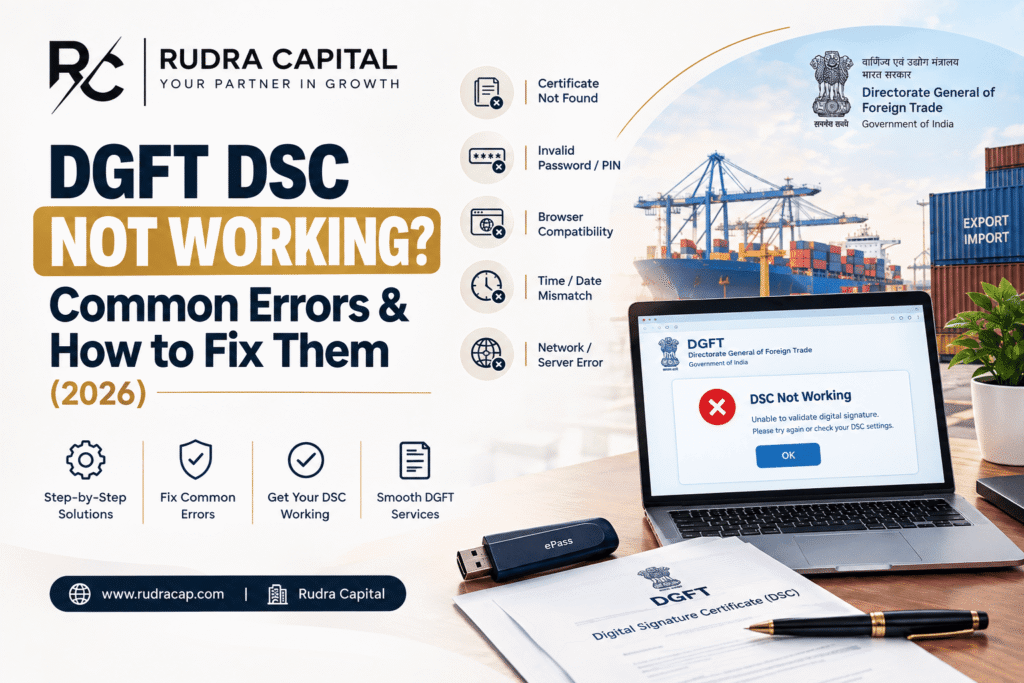
The Real Problem: DSC Tokens Fail for Everyday Reasons, Not Just This
Honestly, the FIPS 140-3 change is not what trips up most DSC users. It’s usually something much simpler, and it happens all year round. If any of these sound familiar, you already know the frustration:
⚠
“Token not detected” — driver missing, or a Windows update broke it
⚠
Wrong PIN entered too many times — token locked, needs unblocking or replacing
⚠
Certificate expired — nobody noticed until the filing screen rejected it
⚠
Wrong signer selected on MCA/GST, or emSigner not recognising the token
⚠
Name mismatch — the DSC name doesn’t match the PAN or portal record
⚠
Physical token damaged — dropped, chip failed, or the USB won’t read it at all
These cause far more missed deadlines than any hardware standard change ever will — and if your current token has already given you one of these headaches, that alone is a good enough reason to just replace it with a clean, new, correctly-set-up FIPS 140-3 token rather than keep patching an old one.
Tired of a DSC token that keeps giving you “not detected” errors, driver problems, or a PIN lock every other month? Sometimes the fastest, least stressful fix isn’t another troubleshooting session — it’s a clean new token, set up right the first time, that you don’t have to think about again for years.
Skip the hassle — get a properly set-up FIPS 140-3 token from our Digital Signature team, ready to use out of the box. Click here to order your new DSC token or WhatsApp/call us at +91-9953572838
Not Sure Which DSC You Need? Here’s the Simple Version
Most businesses just need one type, but it’s worth knowing the basics before you buy:
- Class 3 Signature DSC — the standard choice for GST, Income Tax, MCA/ROC filing, and most portal sign-ins. If you’re not sure what you need, this is almost always it.
- Class 3 Combo (Sign + Encrypt) DSC — needed if you bid on tenders or use the GeM portal, since these usually require both signing and encryption capability on the same token.
- Organisation vs Individual DSC — an organisation DSC lists your company name alongside your own, useful where the portal or tender specifically asks for it. An individual DSC is issued in your personal name only.
If this still feels confusing — it usually does the first time — just tell us what you use it for (GST, ROC, tenders, etc.) and we’ll tell you exactly which one to get. No guesswork on your side.
Not sure whether you need a Signature-only DSC or a Sign+Encrypt Combo, or an Individual vs Organisation certificate? Buying the wrong type is one of the most common — and most avoidable — DSC mistakes, and it usually means starting the whole process over.
Tell our Digital Signature team what you use your DSC for, and we’ll tell you exactly which one to buy. Click here to get the right DSC recommended for you or WhatsApp/call us at +91-9953572838
How It Works — Getting Your DSC Token From Us
1
Tell us what you need it for. A quick call or WhatsApp message — GST, ROC, tenders, whatever it is — and we’ll confirm the right DSC type for you.
2
Share your basic documents. PAN, a photo, and Aadhaar-based verification (plus company documents if it’s an organisation DSC) — we’ll guide you through exactly what’s needed, step by step.
3
We issue and set up your FIPS 140-3 token. No configuration headaches on your end — we make sure it’s installed and working correctly before you need it for a filing.
4
You’re ready to sign. And if anything ever goes wrong later — locked PIN, driver issue, expiry — we’re already your point of contact, not a random helpline.
Getting a future-ready DSC token doesn’t need to be complicated — and it definitely shouldn’t wait until a filing deadline forces the issue.
Tell us what you need your DSC for, and we’ll get you a properly issued, correctly set-up FIPS 140-3 token — no confusion, no guesswork.

Need DSC tokens for multiple directors, staff, or an entire finance team — not just one? We handle bulk DSC issuance for companies just as easily as a single token, and we’ll keep track of every renewal date for you so nobody’s token quietly expires mid-filing-season.
Let our Digital Signature team set up your whole team with new DSC tokens, tracked in one place. Click here for bulk DSC orders or WhatsApp/call us at +91-9953572838
FAQs — FIPS 140-3 DSC Tokens Mandatory From 21 September 2026
Related reading: Digital Signature Certificate — Common Problems & Fixes · ROC Strike Off Notice Under Section 248 · Buy Your DSC Token — Contact Rudra Capital